
Eating well in a city that feeds you
Owambe on Saturday, client lunch on Tuesday, a kitchen run by someone else. Eating well in Abuja is not a discipline problem — it is a design problem.
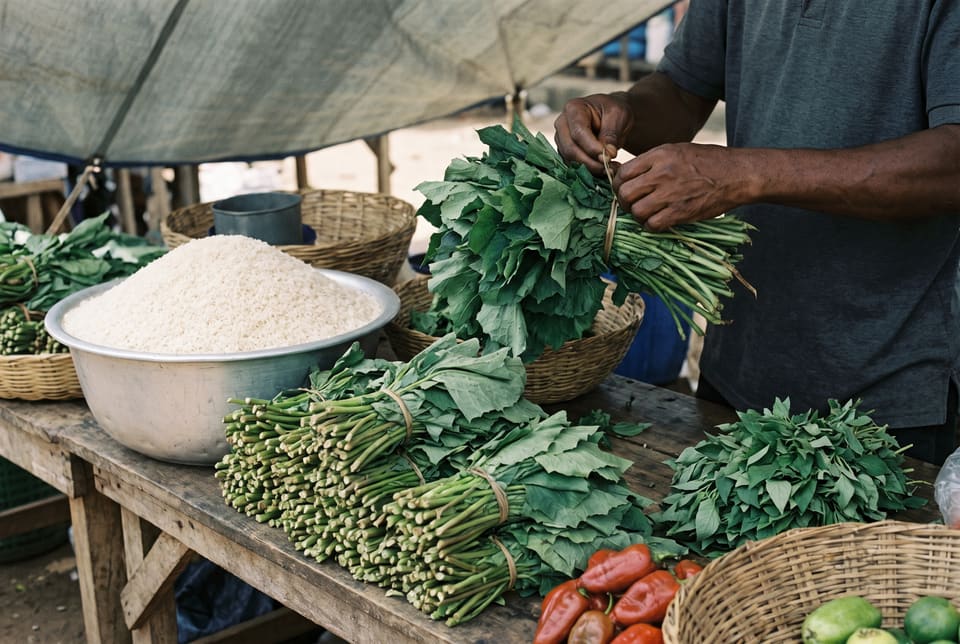
Every eating plan written abroad fails in Nigeria for the same reason. It assumes the person reading it cooks their own food, eats alone, and can decline a plate without consequence. None of that describes the life of an Abuja professional.
Here, food is social infrastructure. The owambe is not optional — it is how family is honoured and community maintained, and arriving means eating. The client lunch is where the relationship is actually built. At home, the kitchen may be run by a cook, a spouse, or a mother-in-law whose jollof is an expression of love, and declining it carries a cost that no nutrition guide accounts for. Travel weeks are hotel buffets and airport food. This is the terrain. It does not change because a plan wishes it would.
So the question is not how do I follow a diet here? Ontos does not issue diet plans, and this is partly why: a plan is a fixed answer, and this life asks a different question every day. The useful skill is judgement — a small set of principles that work at any table.
Sequence beats restriction
At any spread — party, buffet, restaurant — the order you eat in matters more than most single choices on the plate. Protein and vegetables first: the fish, the meat, the efo, the salad. Then the rice, the swallow, the small chops. You will still eat them. You will simply eat them on a settled appetite rather than a roaring one, and your blood sugar will trace a hill rather than a spike. Nobody at the table can see your sequence. It offends no host and no culture.
Arrive fed, not starving
The oldest party mistake is saving your appetite. Arriving hungry at an owambe hands every decision to the buffet table. A proper meal earlier in the day — protein, something with fibre — means you meet the party as a guest rather than as an appetite, free to enjoy the food instead of being ambushed by it.
Eat the culture; drink carefully around it
If something must be managed closely at events, it is less often the jollof than what surrounds it — the bottles that keep arriving, and the sugared drinks that follow, each one appetite in liquid form. Hold one drink slowly. Alternate with water without announcing it. The plate is culture; most of what is poured is just sugar with a logo.
Work with the person who cooks
If someone else runs your kitchen, they are the most important person in your eating life — more important than any expert. Do not hand them a diet sheet; that insults their craft and rarely survives a fortnight. Make two or three specific, respectful requests instead: less oil in the stew than before, more vegetables standing on their own, the protein portion grown, the pot of rice smaller. A good cook can honour these without surrendering a single dish. The food remains Nigerian. The proportions quietly change.
Order like it is a skill, because it is
Restaurants reward the person who knows their order before the menu performs its temptations. Grilled over fried, fish where it is good, a vegetable dish added deliberately, the swallow sized to the soup rather than the other way round. And at lunch, remember what the meal is actually for — the client. Conversation is a natural portion control that no app has improved upon.
The working day is quietly the bigger battle
Events get the attention, but an owambe comes once a week. The working day comes five times, and its food culture has changed faster than anyone planned around: breakfast skipped in the rush to beat traffic, lunch delivered to the desk from an app whose menu rewards the fried and the sweet, the day's real hunger arriving at 4pm in the shape of small chops from the office pantry — and dinner eaten late and large because everything before it was improvised.
Two fixed points tame most of it. The first is a real breakfast — protein in it, eaten before the day starts negotiating — because the person who skipped breakfast is the person the 4pm pastry was designed for. The second is a standing lunch order: choose two or three good options from the usual places once, deliberately, and let them become your default. Decision-making is the weak point at a busy desk; remove the decision and the food takes care of itself. The apps are not the enemy. Ordering hungry, at speed, from a menu built to tempt you — that is the enemy, and it is beaten in advance, never in the moment.
Decline rarely, and warmly
There are moments to simply say no — but they should be spent like scarce currency. A refusal with a smile and a compliment ("I'm pacing myself — but that efo is calling me") preserves both the relationship and the waistline. The aim is never to become the person who does not eat. It is to be the person who eats well, in every sense, and is still invited everywhere.
What runs through all of it: you are not required to choose between your health and your culture. That choice is a false one, invented by plans written for other places. The work — and it is work, the measured kind — is designing your ordinary week so both survive contact with each other. That is exactly the work we do with clients, one real calendar at a time.